Share article:


In this article:
- What is canine pancreatitis?
- Have complete and balanced fresh foods been linked to an increased incidence of pancreatitis?
- Can dogs get pancreatitis while eating fresh food?
- Does fat cause pancreatitis in dogs?
- Is fat bad for dogs?
- Can food prevent pancreatitis in dogs?
We all want the best for our dogs—so, when we hear claims that certain foods might be dangerous to them, we naturally want to learn more. Here are the facts when it comes to fresh food and pancreatitis.
Pancreatitis in dogs is a common disease, and commonly idiopathic, meaning that many cases have no known cause. While researchers have identified risk factors, claims that certain complete and balanced fresh dog foods are at fault for causing pancreatitis are misinformed. The notion comes from a misunderstanding of research and formulation.
In the case of The Farmer’s Dog, all recipes are formulated by our on-staff, board certified nutritionists, rigorously tested, and formulated to fall within known safety ranges across micronutrients and macronutrients, including fat.
While it is true that—like canned and wet foods—fresh foods can have higher fat levels than kibble, not all fresh formulas do. All recipes from The Farmer’s Dog remain in line with other products and brands historically recommended by veterinarians.
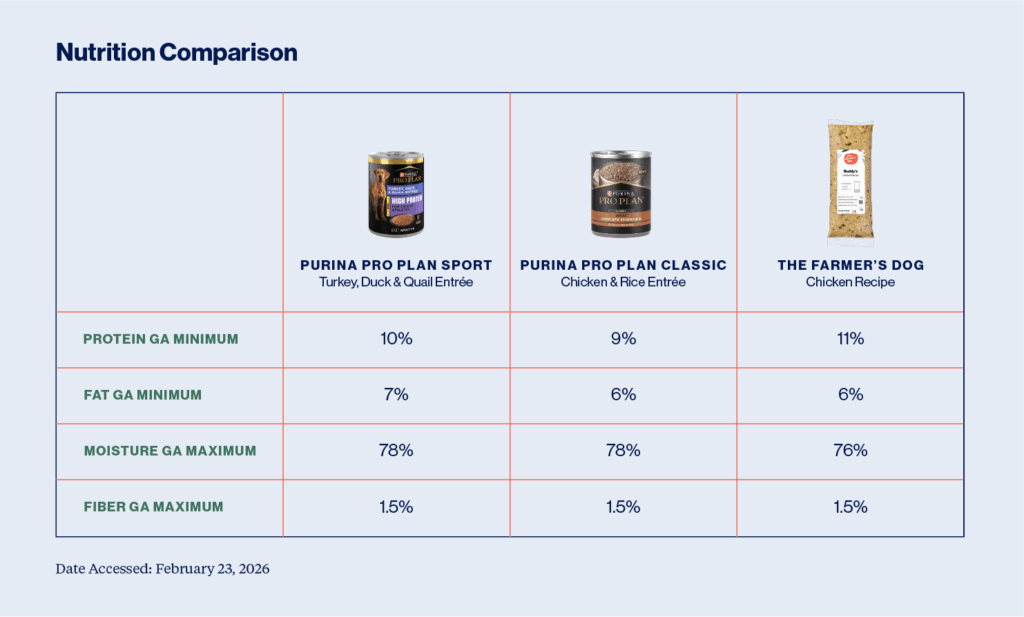
In our feeding trials, we’ve also measured biomarkers correlated with pancreatitis—like triglycerides and blood lipase—and those readings have remained at normal, healthy levels in the dogs eating our food. The Farmer’s Dog uniquely tracks reported health outcomes of its customers’ dogs—and even after a decade and more than one billion meals, we have not seen elevated instances of the disease.
What is canine pancreatitis?
Pancreatitis is inflammation of the pancreas, a glandular organ located between the stomach, liver, and gall bladder. The pancreas serves several functions: It controls blood sugar through insulin production, regulates appetite through hormone release, and helps digestion through the production of enzymes. In a healthy pancreas, these enzymes only activate in the small intestine, breaking down sugar, protein, and fat.
In a dog with pancreatitis, these enzymes prematurely activate in the pancreas itself, inflaming it and potentially inflaming and damaging surrounding tissue and organs. Pancreatitis is painful, and can lead to vomiting, diarrhea, and a loss of appetite.
Pancreatitis can be acute or chronic. Acute pancreatitis comes on quickly without prior incidence or warning, and typically lasts less than two weeks. However, the damage can still be severe or even fatal. Dogs with acute pancreatitis may show signs like vomiting, abdominal pain, and diarrhea. Dogs may also experience mild cases of pancreatitis, which can manifest through signs such as loss of appetite, lethargy, or diarrhea.
Chronic pancreatitis develops over time, even without obvious signs of illness, and may stem from prior bouts of acute pancreatitis from which a dog never fully recovered. This chronic condition can involve irreversible changes to pancreatic tissue, such as excessive scarring known as fibrosis or degenerative loss known as atrophy.
With rapid veterinary diagnosis and treatment, most dogs make a full recovery from acute pancreatitis. Veterinarians can also offer strategies to monitor and manage chronic pancreatitis, including through diet and intravenous fluid therapy.
Have complete and balanced fresh foods been linked to an increased incidence of pancreatitis?
No.
Unfortunately, pancreatitis is common in dogs. While The Farmer’s Dog—like any popular dog food brand—does feed dogs who have pancreatitis, we do not see elevated instances of the disease.
Claims that fresh food like The Farmer’s Dog causes pancreatitis are based on misinformation about poor formulation or inappropriate fat levels. Every recipe from The Farmer’s Dog is formulated by on-staff, board-certified nutritionists to be complete and balanced, with fat and other nutrients in proper proportions to support dogs’ health.
All of our recipes have been rigorously tested—and we have conducted Association of American Feed Control Officials (AAFCO) feeding trials on multiple formulas, demonstrating that they are healthy for daily feeding. As noted above, we’ve also tested for biomarkers like lipase and triglycerides, which are associated with pancreatitis; they remained at normal, healthy levels in the dogs eating our food.
As decades of research demonstrate, canine pancreatitis is a complex condition with many variable risk factors that all interact with each other in ways that are difficult, if not impossible, to untangle. Dogs can develop pancreatitis for many reasons unrelated to diet. From breed to medical history, numerous factors may be at play if a pancreatitis diagnosis arises. The Farmer’s Dog uniquely tracks reported health outcomes of its customers’ dogs—and after a decade and more than one billion meals, we have not seen elevated instances of pancreatitis.
Can dogs get pancreatitis while eating fresh food?
It is estimated that 1–2% of dogs are diagnosed with pancreatitis annually, even more for certain breeds. A much higher percentage of dogs will suffer from pancreatitis at some point in their lives. As a result, it’s inevitable that any popular dog food will see dogs who experience the disease. But that doesn’t make the food the cause.
While there are foods—including some of our own recipes, available via veterinarian recommendation—that can help dogs with chronic pancreatitis, no known diets can fully prevent it. Furthermore, no known complete and balanced foods have been shown to be more commonly linked to the disease.
Does fat cause pancreatitis in dogs?
As noted above, most cases of pancreatitis have no known cause. However, researchers have identified these risk factors:
- Genetic predisposition: Increased prevalence of pancreatitis has been reported in miniature schnauzers, cocker spaniels, dachshunds, poodles, sled dogs, toy breeds like Yorkshire terriers, and others.
- Excess weight: Overweight dogs are at a higher risk of developing pancreatitis than dogs at a healthy weight.
- Hormonal imbalance: Medical conditions that disrupt healthy hormonal ratios, like diabetes or hypothyroidism, can increase risk.
- Medication: Some side effects may increase risk of pancreatitis.
- Trauma: Direct harm to the pancreas, such as from surgery or a car accident, may cause this condition.
- Dietary indiscretion: Eating foods outside of a dog’s normal diet, like garbage or table scraps, is linked to this condition.
Some poorly formulated high-fat diets appear to be dangerous. Research has shown that very low-protein, high-fat diets that are not complete and balanced have been associated with an increased risk of pancreatitis. However, there have not been any published studies demonstrating a cause-effect relationship between high concentrations of dietary fat in 100% complete and balanced diets and pancreatitis in healthy dogs. In fact, a 2009 study compared lower- and higher-fat diets and found that higher fat content alone was not associated with higher pancreatic response in healthy dogs.
Formulas meeting AAFCO and National Research Council (NRC) guidelines are safe for daily feeding, and are specifically designed to meet dogs’ nutritional needs. Every single recipe from The Farmer’s Dog meets these guidelines.
A complete and balanced adult maintenance diet that contains high-quality, digestible protein and fat is the best choice for overall health, and for a healthy recovering pancreas.
Is fat bad for dogs?
Fat is an essential nutrient for dogs.
Your dog requires healthy fats as part of a balanced diet. A high-quality, complete and balanced diet should include those fats, along with protein and other nutrients, in the right amounts and proportions. Ideally, your dog’s diet will provide fats through fresh, lightly cooked food.
When it’s part of a food formulated by on-staff, board-certified nutritionists to meet AAFCO standards, as is the case with The Farmer’s Dog, fat can have numerous benefits. Fat supports healthy skin and a shiny coat, enhances food’s palatability (meaning that dogs like eating it more), increases endurance, and provides a dense and efficient source of energy.
Omega-3 fatty acids, found in fish like sardines, are healthy fats that have anti-inflammatory properties and can help support the quality and condition of your dog’s coat and skin—as well as support brain health and immune-system function.
A diet containing supplemental omega-3 fats is the best option to ensure you’re feeding the right amount and proportion of fats. Complete and balanced recipes from The Farmer’s Dog include omega-3 fatty acids in the right proportions to support dogs’ health.
The Farmer’s Dog offers a therapeutic restricted-fat formula for dogs who have fat intolerances, and whose veterinarians have recommended them—but it’s not necessary for healthy adult dogs, since fat plays an important role in overall health.
Can food prevent pancreatitis in dogs?
Sadly, pancreatitis is very common, and there are no known dog foods that can guarantee it won’t develop in the first place.
As noted above, The Farmer’s Dog does provide therapeutic diets for dogs who already have pancreatitis; if your dog needs these, have your veterinarian contact our customer care team. But even a low-fat therapeutic diet cannot guarantee a pancreatitis flare-up won’t happen, and they continue for many dogs eating such formulas. As noted above, causes of pancreatitis include genetics, trauma, medication side effects, excess weight, and dietary indiscreation—and most cases are idiopathic, meaning that vets don’t know why they happened.
As always, if you’re concerned about your dog’s health and how their diet may be impacting their well-being, your vet or a veterinary nutritionist is your best partner in decision-making. They will take into account the many risk factors that can contribute to acute or chronic conditions, answer your questions, and help you do your best for your dog.
Related Topics
Related Topics
More on Health & Wellness

Health & Wellness • 12 minutes
What Should I Do If My Dog Isn’t Eating?
Here’s veterinarians’ advice for what to do if your dog loses their appetite.

Breeds, Health & Wellness, Nutrition, Training & Behavior • 17 minutes
The Corgi Care Guide
Don’t let the tiny legs and infectious smiles fool you—these working dogs need a lot of physical and mental exercise.
Health & Wellness, Nutrition • 14 minutes
Can My Dog Eat Halloween Candy?
Many spooky-season treats are downright scary for dogs. Here’s how to keep yours safe.
Health & Wellness • 12 minutes
What Should I Do If My Dog Isn’t Eating?
Here’s veterinarians’ advice for what to do if your dog loses their appetite.
Breeds, Health & Wellness, Nutrition, Training & Behavior • 17 minutes
The Corgi Care Guide
Don’t let the tiny legs and infectious smiles fool you—these working dogs need a lot of physical and mental exercise.
Health & Wellness, Nutrition • 14 minutes
Can My Dog Eat Halloween Candy?
Many spooky-season treats are downright scary for dogs. Here’s how to keep yours safe.