Share article:


In this article:
- Did dog domestication start with food?
- Is food still important to the dog–human bond now?
- How can I use food to bond with my dog?
- Can I give my dog a treat “for no reason?”
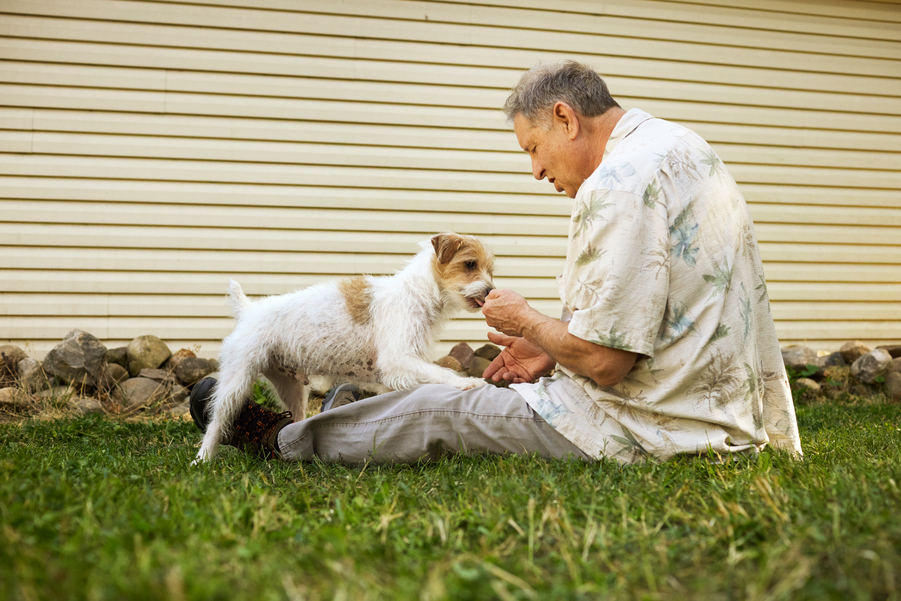
If you’ve ever heard someone say that your dog only loves you because you feed them, here’s the truth: Your bond with your dog is special, real, and irreplaceable—and food is one important aspect of it. In fact, it’s likely that dogs as we know them exist in large part because earlier human beings fed wolves.
Today, food continues to be a key force in any human-dog relationship. Here’s how food brought humans together with their best friends, and how understanding its power can bring you and your dog even closer.
Did dog domestication start with food?
How crucial was food to turning wolves into the friendly dogs we know today? In a word: “Extremely,” according to Raymond Pierotti, PhD, professor of evolutionary ecology at the University of Kansas and co-author of the book The First Domestication: How Wolves and Humans Coevolved.
The beginning of the uniquely close relationship between humans and dogs, Dr. Pierotti said, extends as far back as 40,000 years. Once humans and wolves inhabited the same environment throughout prehistoric Europe and Asia, humans may have started unintentionally feeding wolves through scavenged food scraps. As some wolves discerned the nutritional benefits of sticking close to humans, the opportunity for partnership arose.
While wolves and humans were both adequate hunters, Dr. Pierotti said, wolves excelled more at chasing and catching than at killing, while humans were better at killing than at chasing and catching. “Combine the two of them and everybody benefits,” he said.
Humans and wolves shared their keep and built a sort of camaraderie. “The social bond probably was built around sharing and cooperation,” he said, “and the main thing they had to share was food.”
With continued cooperation, humans’ and wolves’ evolutionary paths intertwined, shaping the generations to come. For example, if a pregnant wolf found humans who fed her, her incentive to stay with them would be much stronger than if she weren’t expecting. This is because a consistent source of higher-quality food would make a larger litter of stronger pups more likely, said Candace Croney, PhD, professor of animal behavior and wellbeing and director of the Center for Animal Welfare Science at Purdue University.
The benefits of sticking close to humans continued after she gave birth, Dr. Croney said, improving the odds of having more litters and of puppies surviving. Looking to their mother for lessons on survival, those puppies would have learned that interacting with humans isn’t just safe, but favorable.
As this process replicated itself, wolves slowly adopted new behaviors in the process of domesticating themselves.
In this process, wolves likely became more confident around humans—a beneficial attitude that would have increased the odds of snagging supplemental nutrition either from scraps or sharing, Dr. Pierotti said. In turn, these novel behaviors gradually brought about anatomical changes over the course of 25,000 years, especially because wolves who collaborated with humans had better chances of reproductive success and passing down their genes. Eventually, you ended up with a buddy who loves to play fetch in the park and snuggle with you while you catch up on your favorite streaming shows.
Is food still central to the human–dog bond today?
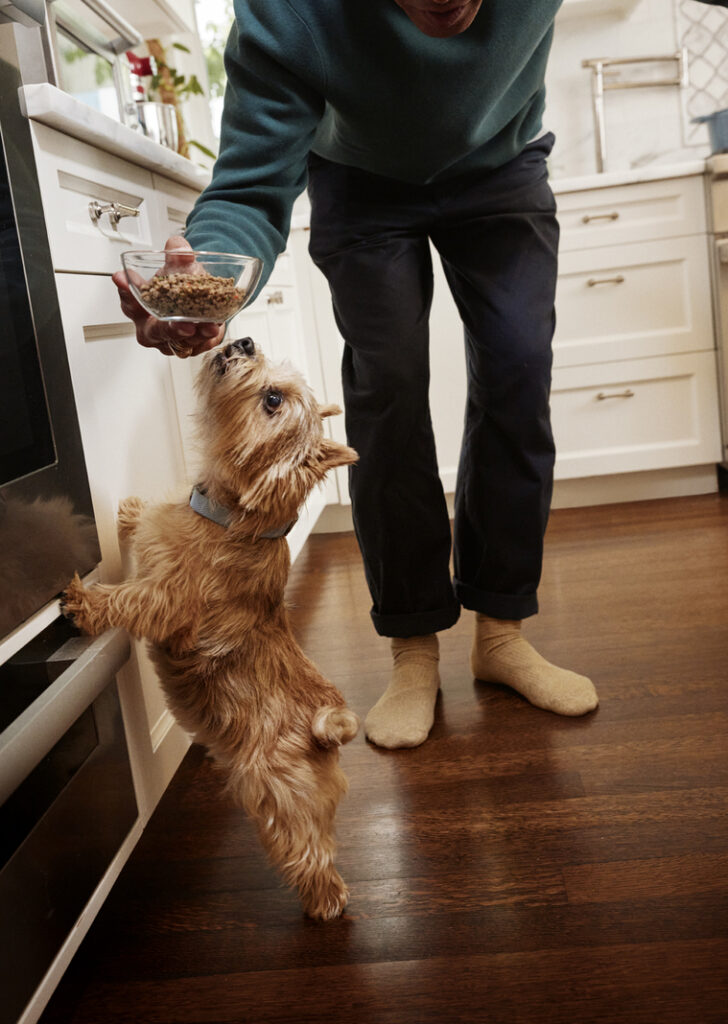
Feeding “is about providing nutrition, but it is also about providing care and love,” Dr. Croney said. That extends not only to what we feed our dogs, but how we feed them.
Tens of thousands of years after dogs and humans first hung out together, Dr. Croney said, dogs have gone from relying on humans for supplemental nutrition to depending on us for all of their alimentary needs. As a result, dogs who live with humans generally no longer need to hunt.
But, for all their wolfish qualities lost to time, dogs still inherit a set of instinctual food-seeking behaviors, Dr. Croney and Dr. Pierotti said. These hunting behaviors occur in a particular order: stalking, chasing, capturing, killing, and then eating. While eating food is pleasurable to dogs, their sense of pleasure comes from the entire process—because it reinforces that this pleasurable procedure is key to survival.
Pet dogs don’t need to hunt, but still derive pleasure from completing this sequence. Dr. Croney said that there’s a word for the notion that some dogs want to work for food instead of “[having] it freely handed to them”: contrafreeloading.
Of course, many dog owners will be quick to point out how much satisfaction their pet takes in simply eating; Dr. Croney agreed that, indeed, “dogs are very motivated to perform the eating part.” But acknowledging that many dogs like a challenge can (and in Dr. Croney’s view, ought to) inform how we use food to bond with our pets.
How can I use food to bond more with my dog?
Knowing that food is a major motivator for dogs, and that they benefit from mental stimulation, dog owners can approach their pet’s breakfast or dinnertime as a chance for engagement. Veterinary professionals take this lesson to heart. “Pet owners should look beyond mealtime as a basic necessity and recognize it as an opportunity for enrichment and mental stimulation,” said Jennifer Merlo, DVM, vice president of veterinary affairs at Fear Free, an organization dedicated to educating the public about reducing patients’ stress at the vet and fostering stronger human-animal bonds. (The Farmer’s Dog has a partnership with Fear Free.)
Using food as a source of stimulation is called “nutritional enrichment,” Dr. Croney said. She added that, as enjoyable as it is for dogs to engage their whole body and brain in working for their food, it can be just as enjoyable for their humans to observe. As owners more intentionally dispense their dog’s food, “people pay more attention to their dogs and the interactions they’re having with them,” she said. This reinforces your bond with your dog. And you don’t need to venture off into the woods with your dog to let them exercise their hunting instincts; Dr. Croney pointed to commercially available lick mats, food puzzles, and toys as ways to challenge your dog safely within the confines of your own home.
Research supports that training your dog keeps them mentally sharp while building trust and communication skills between the two of you, and treats can factor significantly into this learning process. Dr. Merlo emphasized that food can be an effective positive-reinforcement tool during training and during potentially stressful moments, like during vet visits. In this setting, food can help “reduce fear, anxiety, and stress while building trust,” she said.
Can I give my dog a treat “for no reason?”
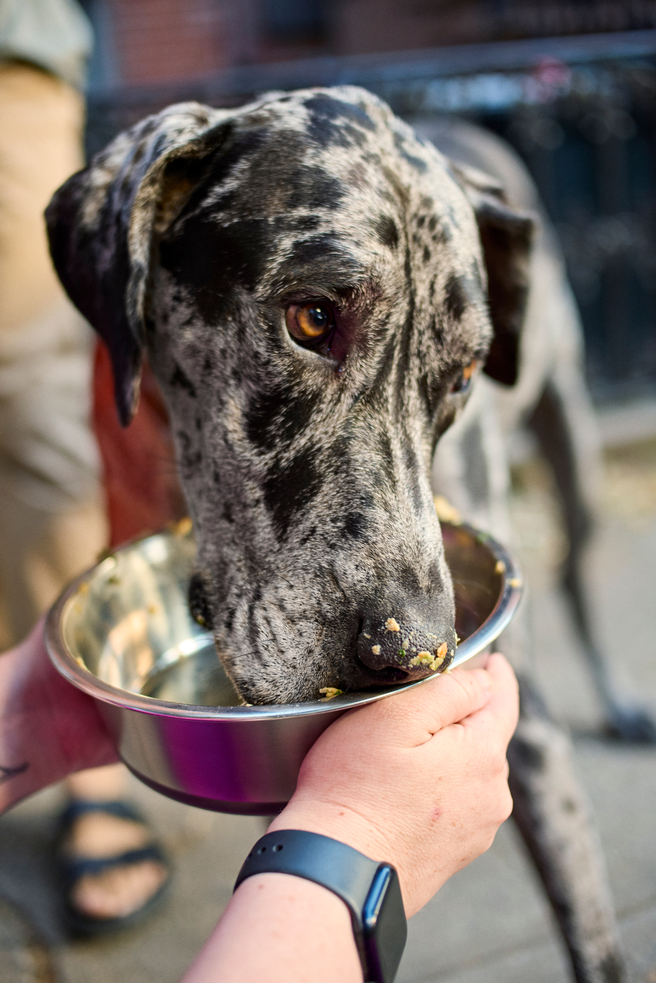
While you may have heard that “nothing in life should be free” for a dog, most qualified trainers will tell you that’s not the case. As long as your dog isn’t doing anything that’s dangerous or against the rules, it’s fine to toss them a treat every once in a while just because you love them. In fact, this can help reinforce that you’re good for them to be around.
But… everything in moderation. As essential as food is to your connection with your dog, it can easily go from enriching their mind to harming their physical health. Sticking to a high-quality, complete and balanced diet, feeding proper portions, and adhering to the 10% rule—the guideline that treats should make up no more than 10% of your dog’s daily calories—can help keep your dog in good shape.
“When owners move beyond simply providing meals and instead create stress-free feeding routines, use food to reinforce positive and desired behaviors, and establish positive rituals around treats and mealtime, food becomes a meaningful tool for strengthening the dog–human bond,” Dr. Merlo said.
Related Topics
Related Topics
More on Science & Research
Science & Research • 7 minutes
Your Golden Retriever May Be Anxious for the Same Reason You Are
A Cambridge study found that dogs and humans share some of the same genes related to behavior and emotions.
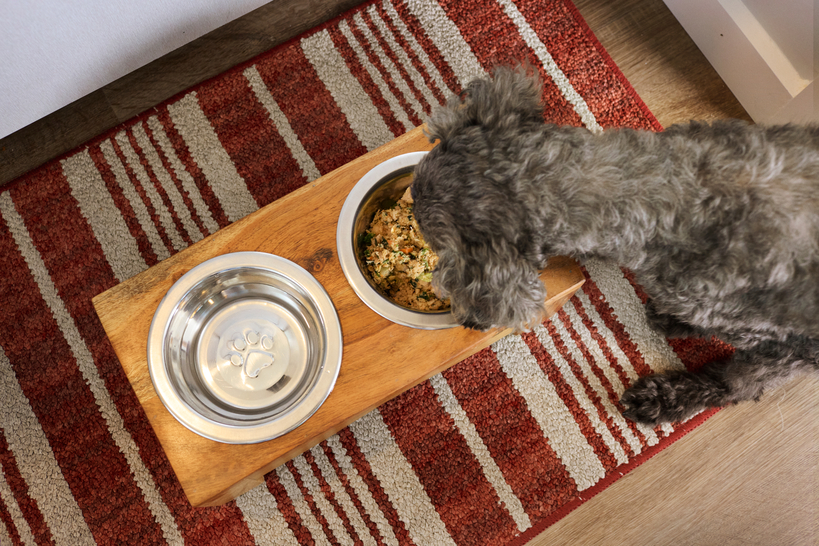
Health & Wellness, Science & Research • 5 minutes
New Studies From The Farmer’s Dog Reveal Hydration Advantages in Fresh, Human-Grade Dog Food
Dogs on fresh food drink less, but get more water. Here’s why.
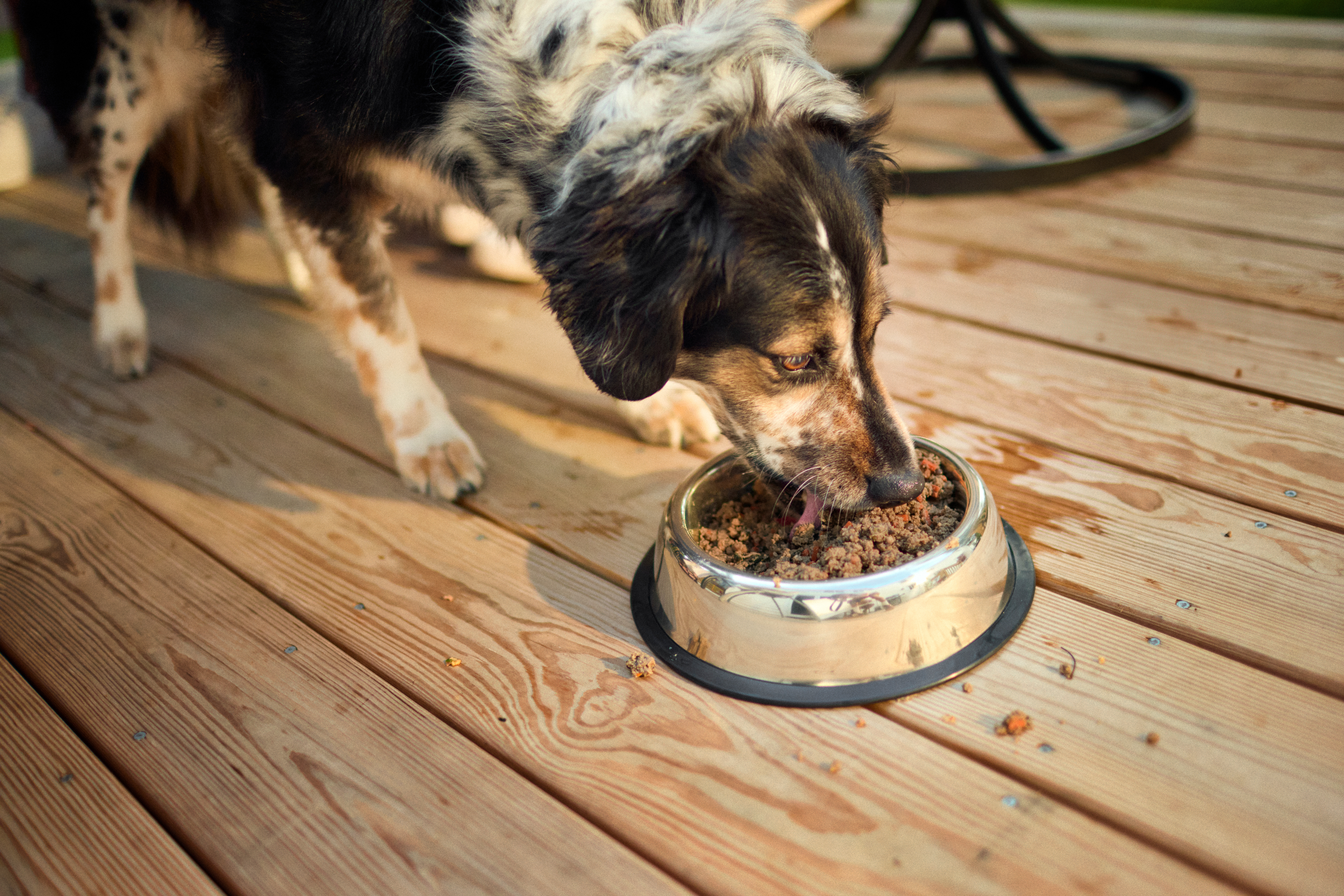
Health & Wellness, Science & Research • 4 minutes
New Study From The Farmer’s Dog Shows That Fresh Food Can Support Healthier Aging in Dogs
Dogs fed fresh food showed a rapid, sustained metabolic shift after just one month.
Science & Research • 7 minutes
Your Golden Retriever May Be Anxious for the Same Reason You Are
A Cambridge study found that dogs and humans share some of the same genes related to behavior and emotions.
Health & Wellness, Science & Research • 5 minutes
New Studies From The Farmer’s Dog Reveal Hydration Advantages in Fresh, Human-Grade Dog Food
Dogs on fresh food drink less, but get more water. Here’s why.
Health & Wellness, Science & Research • 4 minutes
New Study From The Farmer’s Dog Shows That Fresh Food Can Support Healthier Aging in Dogs
Dogs fed fresh food showed a rapid, sustained metabolic shift after just one month.