
Share article:


In this article:
- Should I bring my limping dog to the veterinarian?
- What can I expect when I bring my dog to the veterinarian for a limp?
- What can cause limping in dogs?
- How do veterinarians treat limping dogs?
When you’re used to seeing your best friend bound after a ball, jump to greet you, or contentedly pad along during a walk, it can feel distressing to see them walk with a limp—and even worse when you don’t know why they’re limping.
In many cases, there’s no need for alarm when your dog is favoring a paw or otherwise moving differently than usual. The most important thing you can do is pay attention; having as much information as possible is key to diagnosing and treating the cause of a limp. But sometimes limping dogs need immediate medical attention.
Here’s what might be behind a limp, and when it’s time to call the vet.
When to bring a limping dog to the vet
According to Brian Collins, DVM, Diplomate of the American Board of Veterinary Practitioners, with the Cornell Richard P. Riney Canine Health Center, “the degree of lameness”—the medical term for walking with a limp—should be the main factor in deciding whether to go to a vet right away.
Take your dog to the vet immediately if they’re whimpering, whining, or refraining from putting weight on their leg—they likely need pain relief. Other injuries accompanying the limp, like a wound, bleeding, or swelling, also meet the criteria for rushing to the vet.
Prompt vet visits are also in order if the limp resulted from a traumatic event—like falling down the stairs, jumping from a great height, or being attacked by another animal. In those cases, Dr. Collins said, “the dog should be examined ASAP.”
In the meantime, you can perform a preliminary exam of your dog’s affected leg or paw to find out more, as long as they allow you to gently handle it. See if there’s a sensitive, painful, or swollen spot, or perhaps a foreign object like a splinter or glass. If you find a splinter that’s sticking out of the paw, you might be able to gently remove it with a pair of sterilized tweezers. But Dr. Collins advised that, if it’s too embedded or you’re not comfortable handling it, you leave that job to the professionals.
Sometimes, if your dog’s limp is subtle and they don’t seem to be in pain, you can wait and observe for a couple of days to see if it improves on its own—especially if your dog continues to behave and move normally.
“If no other signs are present except for limping, it is probably reasonable to wait 48 hours after a limp starts to bring them to the vet,” said Zenithson Ng, DVM, Diplomate of the American Board of Veterinary Practitioners (Canine/Feline), a clinical professor of small animal primary care at the University of Tennessee College of Veterinary Medicine. During this period, pay attention to whether the limp abates—but “if it worsens at any point, it is ideal to seek veterinary attention immediately.”
If you’re unsure of what to do, Dr. Collins recommended erring on the side of caution. “If there is ever a question about whether to bring your dog in, it’s always a good idea to call your vet office for advice.”
And, no matter how mild your dog’s limp, bring them to the vet if it’s not better after two days.
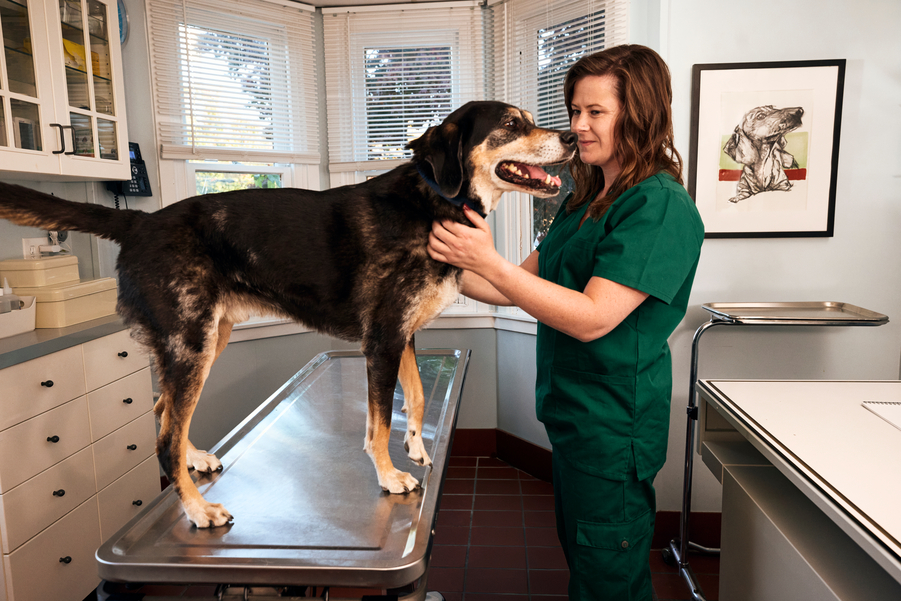
What to expect if you bring your limping dog to the veterinarian
If you bring your dog in for an appointment, a veterinary technician, nurse, or veterinarian may ask you some questions before examining your dog to get as much context as possible. These will likely include:
- When did the limping begin?
- Does your dog have any previous history of limping?
- Did an event or trauma precede the onset of limping?
- Has the limping improved or worsened since you first noticed it?
- Do certain activities seem to exacerbate the limping?
- Has your dog taken any pain medications—and, if so, how well have they tolerated them?
- Have you noticed anything else unusual, including vocalizing (like yelping or whining), lethargy, decreased appetite, biting or chewing on the affected leg, or bad reactions to being touched?
The veterinarian will then conduct a physical examination before making a diagnosis. In some cases they may use imaging like an X-ray, ultrasound, or MRI to figure out what kind of treatment your dog needs, perform an orthopedic or neurologic exam if physical injury isn’t the cause, or draw blood to screen for Lyme disease and other ailments, Dr. Ng said.
Acute vs. chronic limping
A limp can be acute—meaning that it appears suddenly—or chronic, meaning that it sticks around for a long time.
An acute limp may come on very quickly following a single injury, and can be treated or heal over a finite period of time.
Common causes of acute limping include:
- Muscle strain or sprain from overactivity or overexertion
- Bone fracture
- Tearing of a ligament in the knee
- Broken or torn toenail
- Paw pad injury
- Splinter or foreign body
- Insect bite or sting
- Irritating surfaces, like hot pavement or sidewalks covered in salt or ice melt
“Probably the most common and simplest cause of limping is a soft-tissue injury,” said Dr. Ng. This type of injury to a muscle or joint can come from overactivity, and may cause a mild limp. It’s a common hazard for active dogs who love running, jumping, and roughhousing with other dogs.
Acute limps can range from mild to severe. A dog with a mild acute limp may be recovering from, say, stepping on a bee—which is painful, but fortunately not a threat to their musculoskeletal health. But a dog with a severe limp won’t use their paw or leg at all.
Chronic limping may arise from:
- Degenerative musculoskeletal conditions like osteoarthritis
- Developmental disorders like hip and elbow dysplasia
- Bone, joint, or soft-tissue tumors
- Neurologic diseases
- Spinal diseases, such as degenerative disc disease
- Infectious diseases, such as Lyme disease
- Autoimmune disorders, such as immune-mediated polyarthritis
There are interventions and treatments for some of these conditions, but in some cases vets may treat a dog’s chronic pain with non-steroidal anti-inflammatory drugs (NSAIDs), joint injections, or other drugs. These medications may become part of your dog’s daily routine, especially if they live with a degenerative condition.
Dogs with chronic orthopedic problems may also benefit from lifestyle changes like avoiding stairs, or from their people making changes to their environments—like covering uncarpeted floors with a rug or yoga mat.
How to treat limping
A limp is not an injury in itself, but rather a sign of an underlying injury or disease. As such, treatment for a limp varies depending on what’s causing it.
If your dog is recovering from an injury causing an acute limp, or you’ve yet to determine what kind of limp you’re dealing with, “the most beneficial thing is to restrict the dog’s activity and enforce rest,” Dr. Collins said. A leash and crate can be useful tools in making sure your dog doesn’t overexert, potentially worsening their injury. They should also take a hiatus from more thrilling activities like fetch to make sure their leg fully heals.
If an injury is causing your dog pain, your veterinarian may recommend specific medications to make them more comfortable. Always check with your vet before giving your dog medicine.
How to keep your dog moving and healthy
You can protect your dog from acute hazards like salted roads or hot sand by covering their paws with booties or dog-safe wax coatings.
If limping is the result of an underlying condition, you can take steps to prevent it from getting worse. For example, when it comes to osteoarthritis, which often arises in older dogs, look for signs so you can manage your dog’s symptoms. “Many owners assume [their dog is] ‘just getting old,’ but this is a manageable and oftentimes preventable condition,” Dr. Ng said. “As pets age, it’s important to have proactive conversations with your veterinarian about the early management and prevention of osteoarthritis—even before clinical signs develop.”
Another way to prevent limping, he continued, is by maintaining an ideal body weight and good muscle condition with proper nutrition and consistent exercise, which can lower the risk of injury and joint strain.
Proper nutrition and exercise can help keep a senior dog physically and mentally active—and protect their orthopedic health. If you need assistance coming up with a plan that suits your dog’s interests and abilities, call your veterinarian—they are your best partner not only in treating conditions that can cause a limp, but also in prevention.
Related Topics
Related Topics
More on Health & Wellness

Health & Wellness, Nutrition • 7 minutes
Meet Our On-Staff, Board-Certified Nutritionists
Every recipe from The Farmer’s Dog is developed by our on-staff, board-certified nutritionists. Here’s why that’s so important.
Health & Wellness • 5 minutes
Should Your Dog Drink Filtered Water?
Water that’s safe for humans is safe for dogs, too.
Health & Wellness, Science & Research • 3 minutes
New Studies From The Farmer’s Dog Reveal Hydration Advantages in Fresh, Human-Grade Dog Food
Dogs on fresh food drink less, but get more water. Here’s why.
Health & Wellness, Nutrition • 7 minutes
Meet Our On-Staff, Board-Certified Nutritionists
Every recipe from The Farmer’s Dog is developed by our on-staff, board-certified nutritionists. Here’s why that’s so important.
Health & Wellness • 5 minutes
Should Your Dog Drink Filtered Water?
Water that’s safe for humans is safe for dogs, too.
Health & Wellness, Science & Research • 3 minutes
New Studies From The Farmer’s Dog Reveal Hydration Advantages in Fresh, Human-Grade Dog Food
Dogs on fresh food drink less, but get more water. Here’s why.