Share article:


What if the first step in getting your dog to do what you want is considering how they see the world?
In Engage the Senses: Calm, Choice-Led Guide to Enriching Your Dog’s World, Dale McLelland invites her readers to slow down, and, in so doing, allow their dogs to do the same. The certified animal behaviorist sees enrichment as much more than a way to keep our best friends busy.
McLelland’s enrichment involves what she calls “sensory sessions.” These are designed to meet dogs where they are and let them spend time as they like.
“By focusing on who [dogs] are rather than what we want them to do,” she told Digest, “sensory activities support mental stimulation, emotional well-being, and overall quality of life, allowing dogs to thrive as sentient, feeling individuals rather than mere performers.”
“So many books focus on training dogs to meet our expectations, but the idea of giving dogs the space and time to be dogs often gets overlooked,” she said. “With this book, I wanted to re-center the dog’s experience, reminding readers that their natural behaviors and sensory world are remarkable and worthy of greater attention.”
In writing the book, McLelland drew from her own animal-behavior work with clients’ dogs, and her own. She often noticed that when given the opportunity to run and play, most dogs preferred to slowly explore. So she lets them. Her agenda is to let dogs be dogs, and “use their wonderfully designed senses without human direction.”
Below, McLelland goes deeper on how engaging your own dog’s senses can improve their life and yours.
Digest: What were some of the behaviors you observed that shaped your writing?
Dale McLelland: Many of the dogs I work with are stressed or struggling in some way with everyday life. This often leads to increased pressure: more training, more control, and more frustration on both sides. I commonly see behaviors such as excessive excitement, reactivity (barking or lunging), and a lack of genuine connection with their humans.
During behavior sessions, dogs are off lead in my secure area while I gather background information from their guardians. Observing the choices dogs make, how they move, what they investigate, and how attuned they are to their environment is incredibly enlightening.
What struck me most was how often guardians apologized for completely natural dog behaviors like sniffing, scent-marking, or digging. Many would immediately recall their dog or try to stop these behaviors, hoping to show control or “good manners.” Feeling judged is a powerful motivator, and many guardians face this daily when their dog isn’t perceived as obedient enough. These observations highlighted how misunderstood normal dog behavior can be, and how much pressure everyone feels to have an obedient, well-trained dog.
How do you define “enrichment,” and how does your use of it differ from common interpretations?
For me, enrichment is defined by the dog, not by us. Traditional enrichment often centers on food-based puzzles or activities to keep dogs occupied. While valuable in certain situations, food introduces goal-directed behavior, which is very different from self-directed exploration.
I see enrichment as creating opportunities for dogs to engage all their senses in naturally meaningful ways. These are invitations, not instructions. I don’t use food to encourage dogs to interact with objects or surfaces, because doing so removes the element of choice. The presence of food can also cause some dogs to go into performing mode, looking for the “right” thing to do to get the reward. For some dogs, this is incredibly stimulating and frustrating, resulting in more focus on that one element. They are less likely to explore and investigate.
When we provide opportunities, dogs can show preferences, express curiosity, and explore on their own terms. I believe the benefits of slowing down, processing information, and engaging mindfully with the world around them are similar to the effects of mindfulness in humans.
What signs can people watch for to know whether an activity is meaningful to their dog?
It’s important to remember that a dog may find something fascinating one day and ignore it the next; sensory interests are snapshots in time. Look at how a dog interacts: How long do they engage? Do they appear tense, excited, or methodical? Do they return to an object multiple times to gather more information? Equally important is noting what they avoid or ignore; this provides valuable insight too.
What are some of the more unexpected or surprising things that dogs may find meaningful?
Without the need to perform or to be attentive to their guardians, dogs can show their true interests and feelings. For some dogs, the scent of another dog on a blanket or on the ground is hugely interesting. We would not be surprised to hear that. But perhaps objects like herb plants or dog-friendly oils might not be immediately apparent. [Editor’s note: Since some herbs and oils can be toxic to dogs, ask your vet for safe options.]
Of course, it’s important to point out that not all scents are calming to dogs; you just need to watch a male dog getting the scent of a female in season to see that the “sniffing is calming” idea isn’t always accurate. There has been considerable research carried out in terms of the dog’s amazing ability to pick up and make sense of scents, but exactly how that looks and feels to a dog is something that we will likely never know. We do know that dogs will spend longer at a novel scent than a familiar one and that they can differentiate between their own scent and that of another dog.
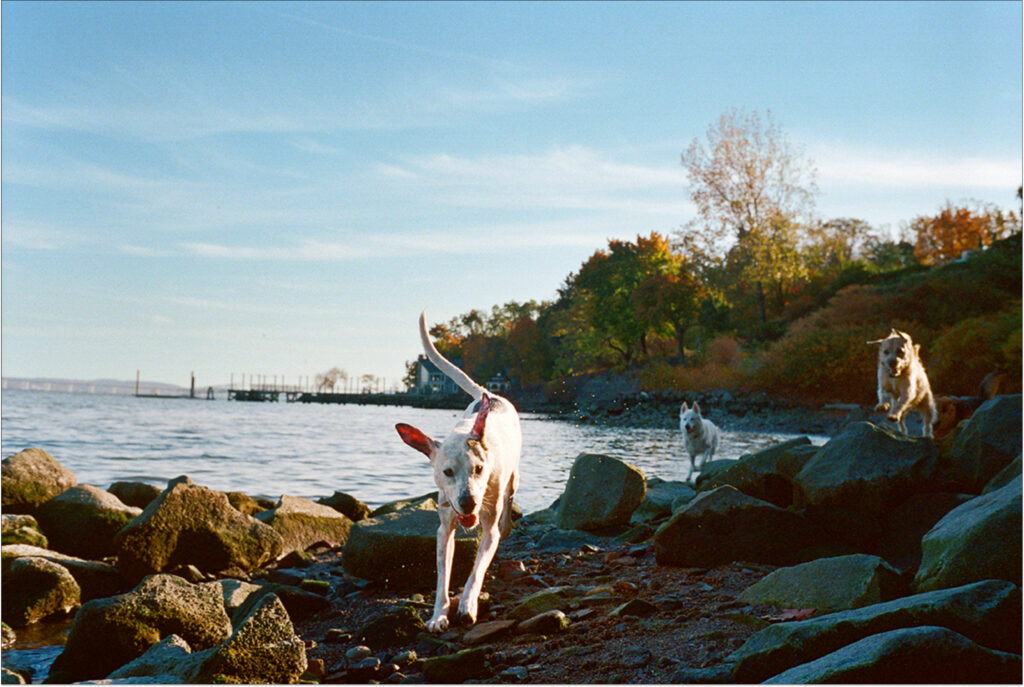
Some things aren’t as clearly evident to us as sniffing is: the sensory information gathered by the paws, hair, and skin. Nevertheless, the brain must process considerable information simply by the dog moving from one surface to another.
For some dogs, a little water in a paddling pool is a lovely addition, but careful observation can tell us what they like about it: is it the movement, the feeling, or do they just want to drink from it? [Editor’s note: It probably doesn’t need to be said, but just in case, always give your dog fresh water.]
What are the key elements of a great sensory session?
A sensory session doesn’t need to be elaborate or expensive. Generally, it’s helpful to think in terms of the senses—sight, sound, smell, touch, and taste. Offering novel scents, objects that are slightly out of place, items that move gently, different textures or surfaces, small changes in height, and low-level ambient sounds can all spark curiosity.
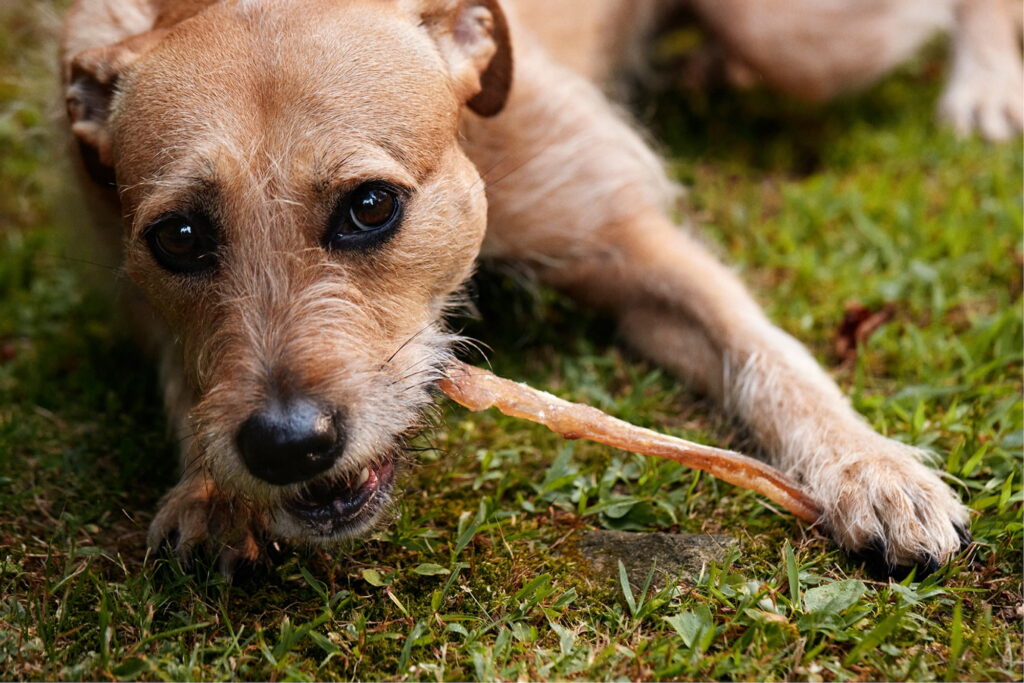
Ending with a chew treat provides a natural conclusion. While a dog’s sense of smell is their most powerful sensory tool, it’s valuable to include more than just things to sniff. Dogs process information from all senses to build a picture of their environment.
You mention choice often in the book. What are some ways to incorporate choice in your dog’s day-to-day life, even outside of these sessions?
For a long time, the topic of choice and agency was considered exclusively a human domain; thankfully, it is now a little more visible in the context of nonhuman animals. How and when this happens can depend on so many factors. None of us are free to do whatever we want whenever we want, but studies show that animals cope better and are more resilient when they believe they have choice opportunities.
On walks, for instance, letting the dog pick the route (as long as it is safe to do so) is a simple start; giving the dog the option to engage with other dogs or people, or to choose not to, should be the approach that underpins our relationship with them. We don’t need our dogs to be able to go anywhere, interact with everyone, and fulfill our desires for the perfect dog.
For those who don’t have a yard to work in, what can they do instead?
Living in the West of Scotland, we are used to the rain, and so we can’t always have our sessions outside. There are still benefits to using an indoor area, but we may need to be a little more creative about how to use the available space. Scaling down the number of items is useful; even a single novel item to investigate will have benefits. Ask your friends with dogs to give you an old blanket, and you can do the same for them. Bringing in items the dog isn’t used to seeing or encountering in that environment sparks interest and curiosity. This is especially important for dogs who are on restricted exercise or unable to go for walks—try to think about bringing novelty to them.
Of course, the best sensory opportunity happens on a walk when dogs are allowed to move freely, to sniff and soak up all of that information—that’s what a walk should be. Think less about racing after a ball and running, and more about slowing down and processing.
What do you wish everyone could know about how dogs experience the world?
I wish that we could know how they experience their world, but we can only imagine from a human perspective. Science can tell us about processes and the mechanisms involved, but we will never really know what it feels like to be a dog.
We don’t need to know exactly how they perceive their world to give our best to them; we just need to be curious and amazed at these animals that share so much with us, are so generous to us, and try their best to meet our expectations. In return, we can think less about control and obedience and more about meeting their natural needs.
Engage the Senses: Calm, Choice-Led Guide to Enriching Your Dog’s World is available now.
Related Topics
Related Topics
More on Training & Behavior
New Dog, Training & Behavior • 9 minutes
How to Potty Train a Puppy: A Step-by-Step Guide
You’ve got this. Your puppy has also got this.

Training & Behavior • 6 minutes
Can You Recognize Your Dog’s Displacement Behaviors?
Sometimes, dogs don’t know where to put their big feelings.
Training & Behavior • 9 minutes
Is There Such a Thing as a Dog Who Isn’t Food-Motivated?
Here’s what to do if you’re having trouble training with treats.
New Dog, Training & Behavior • 9 minutes
How to Potty Train a Puppy: A Step-by-Step Guide
You’ve got this. Your puppy has also got this.
Training & Behavior • 6 minutes
Can You Recognize Your Dog’s Displacement Behaviors?
Sometimes, dogs don’t know where to put their big feelings.
Training & Behavior • 9 minutes
Is There Such a Thing as a Dog Who Isn’t Food-Motivated?
Here’s what to do if you’re having trouble training with treats.