Share article:


In this article:
- What is New World screwworm?
- Is New World screwworm in the United States?
- What are signs of New World screwworm infection in dogs?
- Is there New World screwworm medication for dogs?
- How do I prevent New World screwworm in dogs?
- Can New World screwworm infect humans?
- How can we eradicate New World screwworm?
- Should I be worried about New World screwworm?
This article was originally published in June of 2025, and has been updated.
New World screwworm, a parasitic fly that targets warm-blooded animals including dogs, has reached the United States. As of June 26, 27 cases of infection by this fly have been confirmed in Texas and New Mexico. The victims have included cows, goats, sheep, and one dog.
“Most dog owners in the US should be aware, but not panicked,” said Barbara Qurollo, DVM, a research associate professor of clinical sciences at North Carolina State University College of Veterinary Medicine and co-director of the Vector-Borne Disease Diagnostic Laboratory. “Owners in affected parts of Texas, New Mexico, and other areas under animal-health alerts should be more vigilant and check pets daily.”
Now that the insect has entered the United States, federal and state government sectors are taking action by issuing an Emergency Use Authorization (EUA) for medication and prohibiting entry to dogs coming from infested zones. Here’s what dog owners should know about New World screwworm infection, treatment, and prevention.
What is New World screwworm?
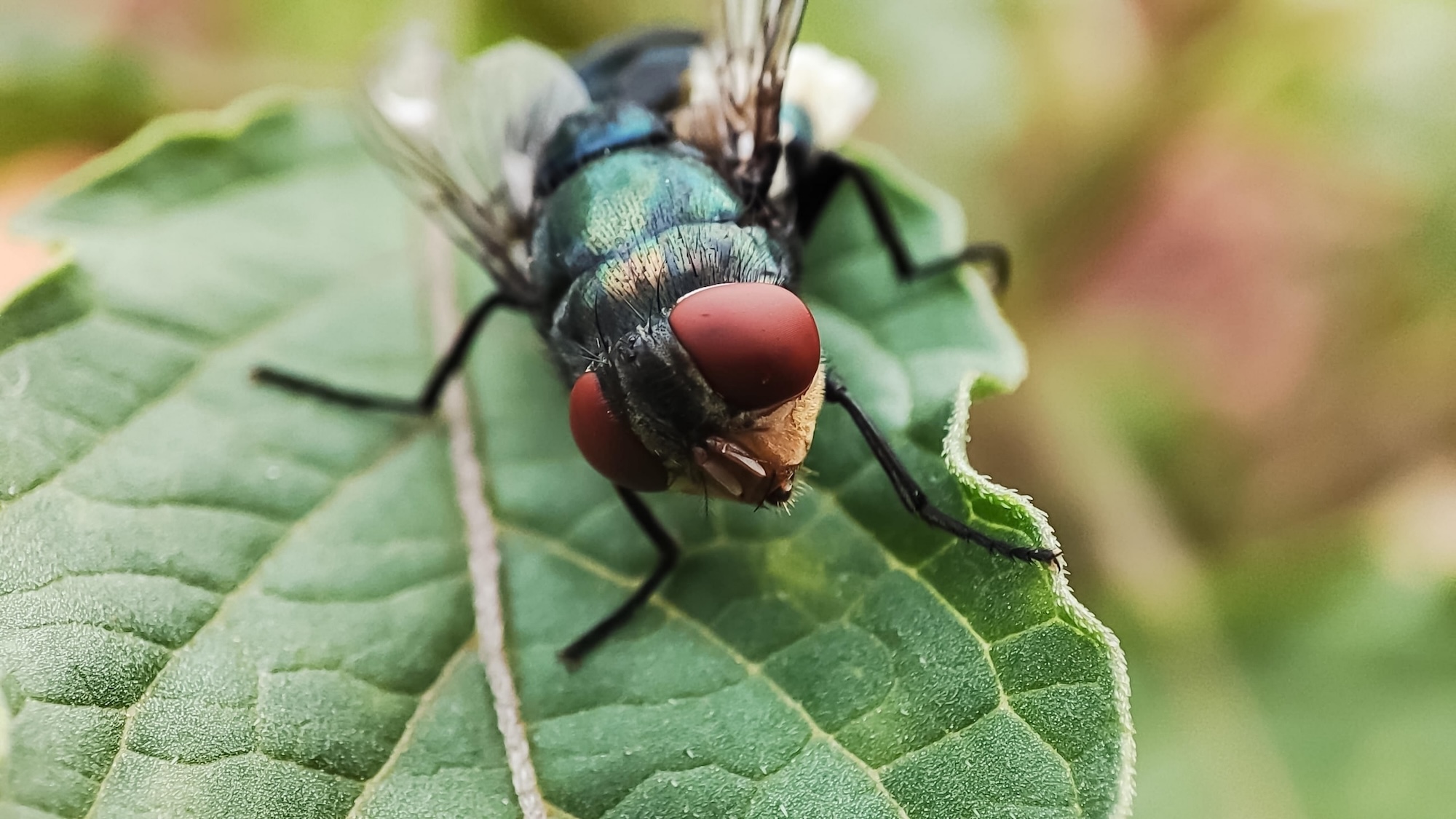
Screwworms aren’t worms at all, but the larval form of a fly. Adult female flies lay eggs in open wounds, and the eggs produce flesh-eating maggots that burrow and screw deep into living skin.
This larval behavior gives this species its common name as well as its scientific name, Cochliomyia hominivorax, which translates to “man-eating blowfly,” with homini- meaning “man,” -vorax meaning “devouring,” Cochliomyia as the genus for “blowfly.”
Is New World screwworm in the United States?
The first US-based case of New World screwworm infection from this infestation was confirmed in a calf in Texas on June 3. Since then, the Centers for Disease Control and Prevention (CDC) have activated a Level 3 emergency response (the lowest level), and they are actively monitoring the situation.
New World screwworm can spread quickly because a single fly can lay hundreds of eggs at once, resulting in thousands over her lifetime of up to 30 days. Larvae feed for about a week before falling to the ground and developing into adult flies, Dr. Qurollo said.
Containment of this parasite depends on rapid detection, reporting cases, treating infected animals, safely disposing of larvae, restricting animal movement, and more. As part of this restriction strategy, New York and Florida are forbidding entry to dogs—including those from rescues and shelters—who come from parts of Texas and New Mexico where there are infections.

What are signs of New World screwworm infection in dogs?
New World screwworms burrow in abraded flesh, so any lesion would appeal for egg-laying. According to the CDC, a wound “as small as a tick bite” could attract a female screwworm. Once the eggs hatch into the larval stage, the site gets a foul smell (like decay) and has visible maggots in it. The wounds are painful and grow instead of healing, and your dog may bite or lick the affected area. Left untreated, New World screwworm infections can be fatal within one to two weeks.
Other signs include:
- Bleeding or bloody discharge
- Fluid drainage
- Licking at a wound
- Lethargy
- Unusual restlessness
- Fever
- Reduced appetite
- Behavior changes
Dr. Qurollo said that if you suspect a case of New World screwworm infection in your dog, you should treat it as urgent and contact your veterinarian or an emergency vet, who would ideally remove the larvae. The American Veterinary Medical Association urges owners not to remove larvae themselves.
Is there New World screwworm medication for dogs?
On June 11, the Food and Drug Administration issued an EUA for a drug called nitenpyram—typically used to treat fleas in cats and dogs—to treat New World screwworm infestations in dogs, puppies, cats, and kittens weighing at least two pounds and at least 4 weeks old. This drug quickly kills the larvae, but that’s not the end of treatment.
“These drugs can help kill larvae quickly, but they do not replace veterinary wound care,” Dr. Qurollo said.
Full treatment involves killing and physically removing all the maggots, cleaning and managing the wound, mitigating pain, and treating any bacterial infection that may have arisen.
How do I prevent New World screwworm in dogs?
The best way to prevent screwworm infection in your dog is to prevent wound formation. Avoid situations that could create even a small, superficial cut. If your dog is prone to forming hot spots, keep these wounds clean and covered—and consider using an Elizabethan collar to prevent your dog from biting and licking them.
If you live in affected or high-risk areas, check your dog daily for cuts, tick bites, hot spots, and other wounds. Avoid exposing dogs with open wounds to outdoor environments where there are lots of flies.
Can New World screwworm infect humans?
Yes, but human cases are less common than animal cases. In August 2025, one human case of New World screwworm was confirmed in a person who had returned to the US after traveling to El Salvador. The CDC has written that the risk of New World screwworm in people “remains very low.”
How can we eradicate New World screwworm?
The good news is that the US has successfully dealt with these insects before. It’s been around 60 years, but the flies were eradicated here in the middle of the last century. The method for combating their spread back in the 1960s is the same one used now: Breeding sterile male flies to mate with egg-laying females. The eggs produced by this mating are not viable. The United States Department of Agriculture (USDA) announced the completion of a sterile fly dispersal facility in Texas earlier this year.
The government will spend another $21 million on converting a facility in Mexico once dedicated to fruit flies into a screwworm breeding factory. One such facility already exists in Panama. The plan is to re-establish the barrier against these dangerous insects.
Should I be worried about New World screwworm?
As Dr. Qurollo said, most dog owners in the US don’t need to worry, but should keep up with this situation as it develops. “The risk is highest for dogs that live in or recently traveled through areas with confirmed New World screwworm detections, especially if they have wounds or outdoor exposure around livestock or wildlife,” she said.
In the meantime: Know what to look for, do your best to keep your dog wound-free, and be ready with an action plan in case you spot signs of an infection.
Related Topics
Related Topics
More on Health & Wellness

Health & Wellness • 3 minutes
Common Causes of Dog Diarrhea
We’ve all been there. You take your dog out for a walk, he squats to do his business, and it happens: diarrhea. There’s nothing worse than seeing your pup squirm in discomfort — except for the part where you have to clean up the aftermath. If your dog is having diarrhea on a regular basis, […]

Health & Wellness • 2 minutes
6 Signs Your Dog is in Pain
Our dogs can’t technically talk, but they can communicate when something feels wrong. Watch out for these telltale signs that your dog may be in pain. Going overboard on grooming It’s not out of the ordinary for dogs to groom themselves, but if you spy your pup excessively licking an area, it could be a sign […]
Health & Wellness, Nutrition • 7 minutes
“How Often Should I Wash My Dog’s Food Bowl?” And Other Questions About Clean Eating for Canines
How often do you wash your dog’s bowls? How often SHOULD you wash them? We dig into the FDA’s recommendations around dog-food hygiene, and answer common questions about how to protect dogs and their humans from pathogens in the kitchen.
Health & Wellness • 3 minutes
Common Causes of Dog Diarrhea
We’ve all been there. You take your dog out for a walk, he squats to do his business, and it happens: diarrhea. There’s nothing worse than seeing your pup squirm in discomfort — except for the part where you have to clean up the aftermath. If your dog is having diarrhea on a regular basis, […]
Health & Wellness • 2 minutes
6 Signs Your Dog is in Pain
Our dogs can’t technically talk, but they can communicate when something feels wrong. Watch out for these telltale signs that your dog may be in pain. Going overboard on grooming It’s not out of the ordinary for dogs to groom themselves, but if you spy your pup excessively licking an area, it could be a sign […]
Health & Wellness, Nutrition • 7 minutes
“How Often Should I Wash My Dog’s Food Bowl?” And Other Questions About Clean Eating for Canines
How often do you wash your dog’s bowls? How often SHOULD you wash them? We dig into the FDA’s recommendations around dog-food hygiene, and answer common questions about how to protect dogs and their humans from pathogens in the kitchen.