Share article:


In this article:
- How do I know if my dog is licking themselves too much?
- Do dogs lick themselves because of allergies?
- Do dogs lick themselves because of fleas?
- Do dogs lick themselves because of skin infections?
- Do dogs lick themselves because of boredom?
- Do dogs lick themselves because of stress or anxiety?
- Do dogs lick themselves because of injuries?
- Do dogs lick themselves because of chronic pain?
- Do dogs lick themselves because of urinary tract infections?
- Do dogs lick themselves because of anal sac issues?
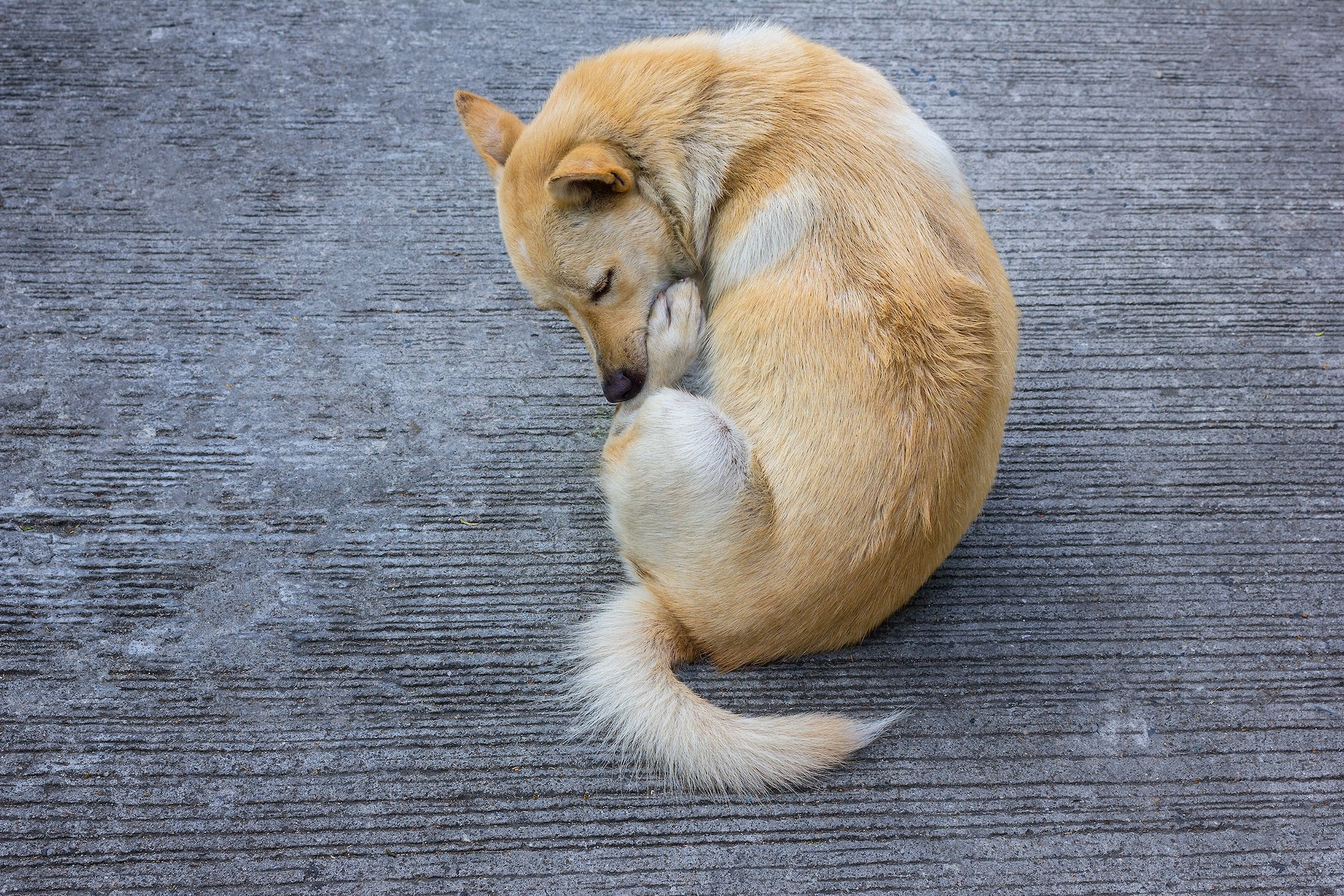
We know that dogs’ paws can smell like Fritos… but do they taste like them, too? How else can we explain the constant licking?
Dogs’ sense of taste is not as discerning as ours, but some of them seem to savor a sample of everything: their paws, their haunches, our faces… even the blanket next to them is fair game. Sometimes, it’s cute. Other times, you might begin to wonder if something deeper is going on.
According to Shalsee Vigeant, DVM, Medical Director for VEG ER for Pets in Sugar Land, Texas, signs that a dog’s licking has become excessive may include:
- There’s staining on your dog’s fur
- It interferes with their daily life (e.g., in the middle of eating, playing, or sleeping, they stop to “lick, and lick, and lick”)
- It seems to be happening all the time
- It’s causing any sign of trauma (red skin, hair loss, etc.)
Dr. Vigeant told us that excessive licking can stem from many possible causes. As a result, she said, “Working it down to figure out what it is can always be a little bit more difficult.” That’s why it’s crucial to call your veterinarian if you suspect anything is seriously wrong.
Having said that, here are some common reasons that dogs lick themselves.
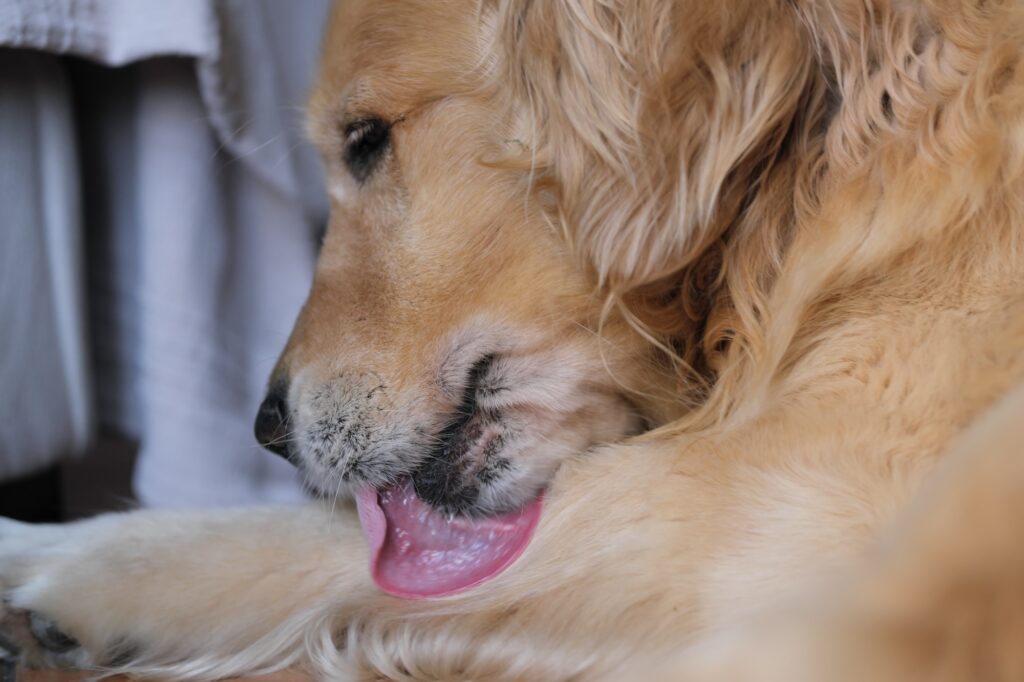
They’re dealing with allergies
Just like people, dogs can be allergic to a variety of things. If your dog can’t stop licking and scratching due to allergies, there are a few possible culprits:
- Environmental allergies: Your dog might be allergic to natural irritants like plants, pollen, mold, mildew, or dust. Chemical products can also cause reactions in certain dogs.
- Flea allergies: If your dog has a flea allergy, even one or two bites can cause significant irritation.
- Food allergies: True food allergies are rare in dogs, but some do show immune responses to certain ingredients in their food. The Farmer’s Dog has strict safety controls designed to help avoid allergen carryover and cross-contamination—which may make it easier for you to avoid ingredients that they shouldn’t eat.
Your vet will be able to narrow down possible allergic causes the fastest, but you can also start logging context clues at home. If your dog only licks and scratches during certain months, they might have a seasonal allergy. If they alternate between licking their paws and rear end, it could be a food sensitivity. And if they lick one specific spot where their body touched a possible irritant, like a grass or a detergent, it could be a contact reaction.
They’ve got fleas
If your dog has a flea infestation, chances are you’ll know it from the insect circus jumping around in their fur (or from the “flea dirt,” meaning flea feces, they leave behind). Still, Dr. Vigeant said, many dog owners look for only these signs, and when they don’t find them, they go into what she called “flea-nial.” Remember: dogs with flea allergies can find themselves staging a full-on itch fest after just a couple of bites, including by chewing on the base of their tail. And this might happen even if you don’t see any other evidence of fleas.

They’ve got a skin infection
Some skin infections, like hot spots, are easy to … well, spot. These need to be seen by a vet so that they can shave the area and apply an anti-inflammatory cream. But other infections can start beneath the skin’s surface.
For example, grass awns and foxtails can burrow into our dogs’ skin, eventually leading to an infection. “Even if you don’t see one of those things, it doesn’t mean it’s not there,” Dr. Vigeant said. “It might just mean it’s not severe enough for you to have picked up on it yet.” In these cases, gently feel around the problem area to see if your dog is sensitive to touch. If they are, that might signal a problem.
“Any time you’re seeing raw skin or swelling, or it actually looks like it’s hurting, you absolutely need to see a vet,” Dr. Vigeant said. “There’s no way that you can treat them without finding out what the actual cause is and how to fix it.”
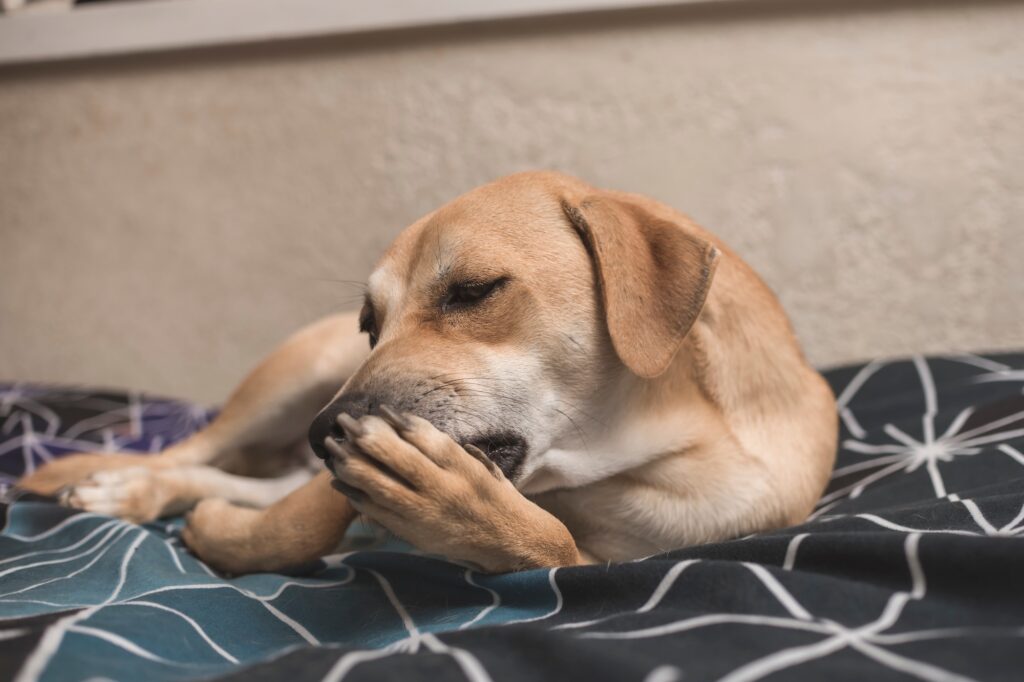
They’re bored, stressed, or anxious
Licking is often a displacement behavior dogs use to self-soothe in trying moments big and small. And it’s not always a problem, as long as it’s not causing your dog any issues. According to Anamarie Johnson, PhD, CAAB, CDBC, and founder of Access to Behavior Consulting, “Licking doesn’t always have to be corrected.” The more pronounced and prolonged the behavior becomes, however, the more important it is to intervene.
“If it’s happening after dinner and it lasts two minutes, maybe it’s a post-meal thing and maybe not something to worry about,” Dr. Johnson said. She likened some small amount of post-meal licking to a human washing their hands or otherwise tidying up. But if the behavior lasts, say, 20 minutes, you might try long-lasting treats, an extra walk, training exercises, or setting up a quiet, safe space during times of disruption.
Boredom
No one likes sitting in a room all day with nothing to do, and that includes dogs. Dogs can’t whip out their phones and check their social media feeds when the day gets dull, so it’s up to us to give them something enriching to do; otherwise, they might lick themselves as an outlet.
The simplest solution could be to provide something more rewarding to lick. Dr. Vigeant suggested frozen treats, puzzle feeders, and ball feeders that provide a little mental stimulation. “Obviously,” she said, “those things are better than medicating.” Some cases may require medication, but trying enrichment first can be easier and more pleasant for human and dog alike.
Stress and anxiety
Anxious dogs often lick more than just themselves; they might lick inanimate objects, other dogs, and even us. If a few new toys don’t do the trick, it’s time to be “your own detective,” as Dr. Johnson put it.
Spend a week(-ish) tracking all the times you catch your dog licking, how long it lasts, and anything else that might be going on in the background. Then, check for patterns: Is it happening at a certain time of day? Does it happen every time you’re away? When guests come over? All of these details will help you make a plan.
In some cases, alleviating situational stress is not enough. Some dogs with severe anxiety or canine compulsive disorder will lick themselves even with these changes, sometimes to the point of hair loss. In these cases, Dr. Johnson recommended seeing a vet who can prescribe medication and other interventions. “You absolutely should talk to a vet about this,” Dr. Vigeant said, “and don’t be surprised if your veterinarian refers you to a canine behaviorist.”
They’re injured
Dogs might lick anything from a torn anterior cruciate ligament (ACL), to a bee sting, to a torn toenail. Although some injuries, like a cruciate tear, should come alongside other symptoms like limping, Dr. Vigeant said dogs can also be very stoic about pain—so, believe it or not, licking might be the first sign you notice.
They have chronic pain
Chronic pain can often go unnoticed, especially in older dogs. As Dr. Vigeant pointed out, pet owners are often better at spotting acute injuries than ongoing conditions. “I think we get so used to seeing our dogs, we sometimes don’t recognize chronic pain,” she said. Instead, “We see them licking [and] tell them to stop.”
Research has repeatedly linked weight and arthritis risk, and overweight dogs tend to show more severe signs. This is among the many reasons why maintaining a healthy body weight and condition is so important for dogs.
For dogs with chronic conditions like arthritis, Dr. Vigeant said, medication often makes a huge difference. She’ll often suggest that dog owners give their dog an anti-inflammatory medication for five to seven days to see if it works, only for them to come back saying, “Holy baloney! They acted like a totally different dog.”
They’re dealing with another health issue
Localized licking can signal deeper health issues, which is why it’s important to keep close tabs on where and when the licking occurs.
Urinary tract infections (UTI)
If your dog is constantly licking the area from which they urinate, then something’s going on. For female dogs, brown staining can be a telltale sign of a UTI—but you don’t need to see blood in their urine, or any other discharge, for them to have one. If you suspect your dog has a UTI, it’s time to see the vet. “Any human who’s had a urinary tract infection knows it is not comfortable,” Dr. Vigeant said. “Our dogs feel the same way.”
Anal sac issues
We all love to joke about dogs licking their rear ends and then giving us a kiss. That said, Dr. Vigeant warned, dogs don’t lick that area “continually and excessively unless there’s a problem.” Excessive licking near the rear end could indicate that your dog’s anal glands are impacted and need to be expressed. Unless you want to get very up close and personal with your dog, you’ll probably want a vet to do this. Rarer issues in this region can include abscesses or tumors.
They’ve found something yummy in their fur
Still flummoxed? It might be time for a bath. There’s always a chance your dog’s got something tasty (or disgusting) lodged in their fur. And remember: if your dog is suddenly licking themselves more than usual and you don’t know why, the best move is to call your vet.
Related Topics
Related Topics
More on Health & Wellness

Health & Wellness • 12 minutes
What Should I Do If My Dog Isn’t Eating?
Here’s veterinarians’ advice for what to do if your dog loses their appetite.
Breeds, Health & Wellness, Nutrition, Training & Behavior • 17 minutes
The Corgi Care Guide
Don’t let the tiny legs and infectious smiles fool you—these working dogs need a lot of physical and mental exercise.
Health & Wellness, Nutrition • 14 minutes
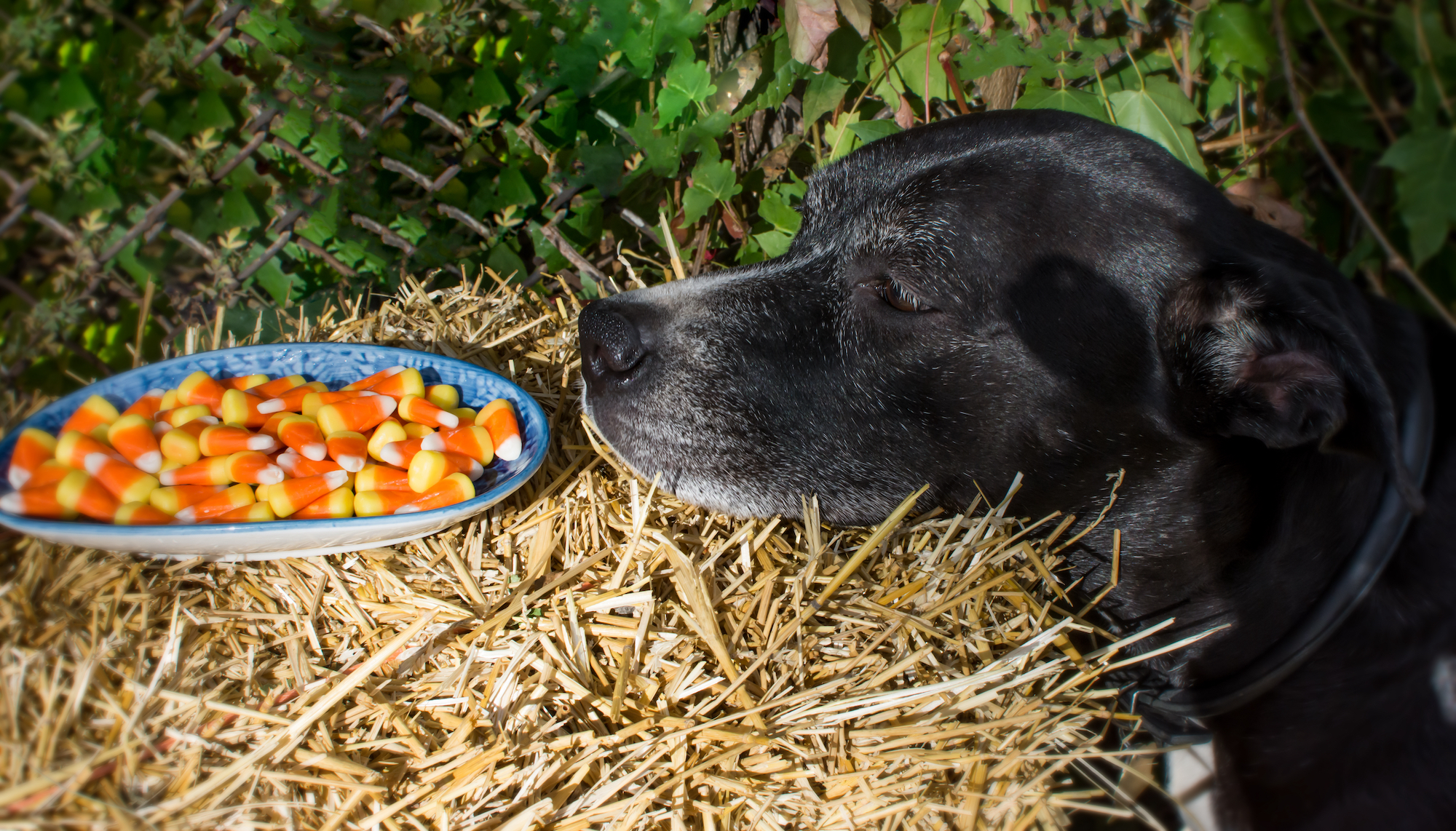
Can My Dog Eat Halloween Candy?
Many spooky-season treats are downright scary for dogs. Here’s how to keep yours safe.
Health & Wellness • 12 minutes
What Should I Do If My Dog Isn’t Eating?
Here’s veterinarians’ advice for what to do if your dog loses their appetite.
Breeds, Health & Wellness, Nutrition, Training & Behavior • 17 minutes
The Corgi Care Guide
Don’t let the tiny legs and infectious smiles fool you—these working dogs need a lot of physical and mental exercise.
Health & Wellness, Nutrition • 14 minutes
Can My Dog Eat Halloween Candy?
Many spooky-season treats are downright scary for dogs. Here’s how to keep yours safe.