Share article:


In this article:
- Why is my dog scared of the car?
- How can I help my dog get over their fear of the car?
- What should I bring on a road trip with my dog?
- When should I bring my dog who’s afraid of cars to the vet?
The holidays are approaching. For many of us, that means road trips. According to the American Automobile Association, more than 100 million Americans drive to visit friends and family each December—and many of them, presumably, have pets in tow.
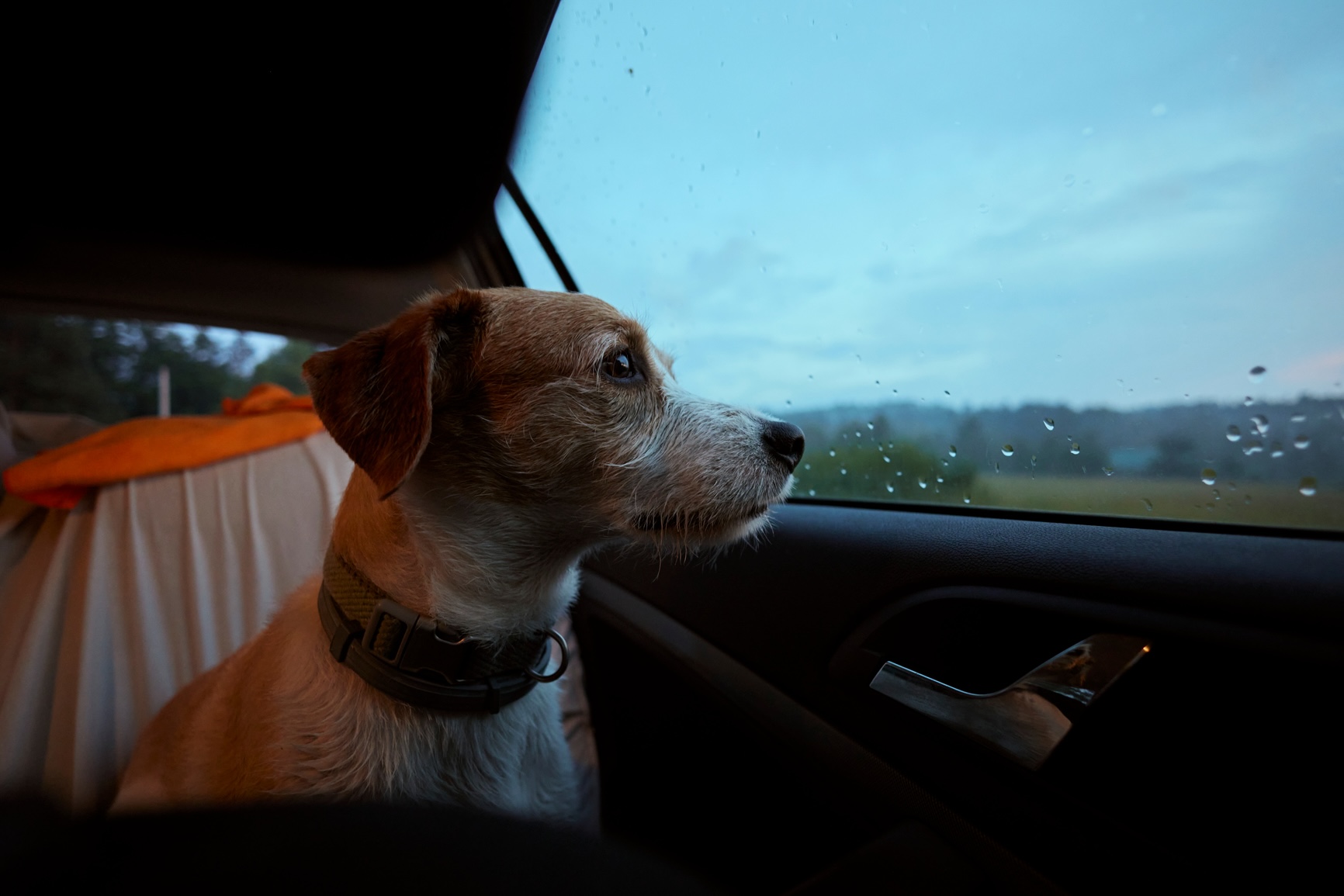
These drives are exciting for those of us who need a fast, convenient way to get to grandma’s house, but they can also be stressful for our best friends. Some dogs love piling into the car with their people, but others definitely do not. Dogs who are afraid of the car might cower in the back seat—or worse, throw up all over it.
If this sounds like your dog, early intervention is key.
The solution will depend on your exact situation, but know this: whatever your dog’s reason for fearing the car might be, you’re not alone. In fact, certified dog behavior consultant (CDBC) and accredited dog trainer (ADT) Emily Scott said she recently saw four cases of fear in the car during the span of two weeks. “It’s more common than people realize,” she said, “and I think if you see it, you would do well to contact a behavior consultant or somebody who can help you and your dog through it.”
Here’s what you need to know to get your dog road-trip ready.
Why is my dog scared of the car?
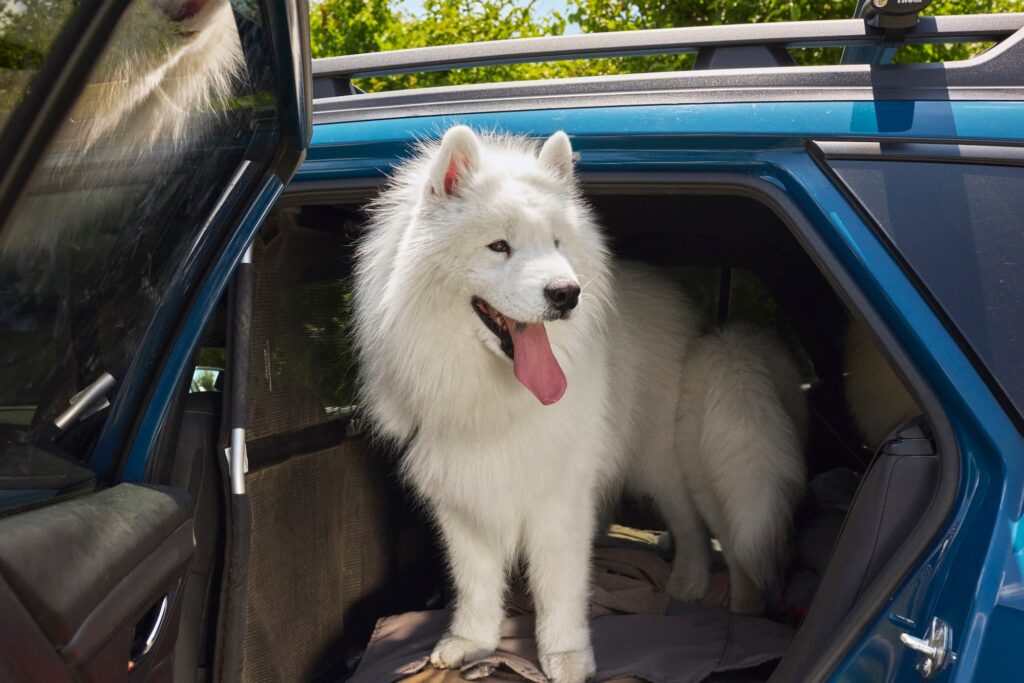
Understanding what, specifically, is bothering your dog about the car is an important step toward helping them overcome their fear. The most common causes of canine car-phobia include:
Carsickness
Like small children, dogs often get queasy in cars. And, just as young humans are more likely to get carsick, puppies are more likely to be afflicted than adult dogs.
Fear of the destination
If a lot of your car rides end at the vet’s office or the groomer, chances are good that your dog will become less and less eager to hop in over time.
Generalized anxiety
Dogs with generalized anxiety tend to feel terrified by new places, people, and situations—so naturally, most of them don’t love getting strapped into a moving vehicle and toted to unfamiliar locations.

Trauma
It doesn’t have to be a car crash; even smaller disruptions, like sudden stops and sharp turns, can leave our best friends feeling fearful. According to Scott, rescue dogs can also learn to fear cars when they’re first picked up and brought to the shelter—especially if they’ve never seen a car or been inside of one before. “After that,” she said, “anything associated with a car ride is going to be, really, a hot mess.”
Physical discomfort
The back of a car isn’t the easiest place for dogs to relax. Karen Sueda, DVM, a board-certified veterinary behaviorist, put it this way: “It’s kind of like sleeping on a twin bed in a turbulent boat.” If your dog struggles to balance in the back seat, or tumbles around a lot, it’s understandable they might become afraid of the car.
Fear of getting in
Some dogs show signs of distress while getting in the car, only to turn around and seem happy as clams once they’re strapped in and ready to go. “That’s not as common,” Scott said, “But I have seen it.”
How can I help my dog get over their fear of the car?
Depending on why your dog fears the car, one of these strategies—or a combination of them—may help them shift into a more contented gear on the road.
Try desensitization and counterconditioning
If your dog isn’t just nauseated, but actually scared of the car, don’t plan a 12-hour road trip for next weekend. Instead, Scott recommends budgeting six to eight weeks for a behavior modification plan—with small, gradual steps designed to teach them that getting in the car means something wonderful is about to happen.
This strategy can be useful for dogs who are afraid of the car because it’s usually taken them to the vet, because they’ve had a traumatic experience, or because they’re apprehensive about unfamiliar things.
Here’s a breakdown of how it can work.
- Step one: Park in the driveway, or on the street just outside your home, at a calm time of day. Leave all the car doors open. If your dog is willing to approach, sit on the seat while they sit just outside the car. Give them a long-lasting, high-value treat to enjoy.
- Step two: Once your dog is comfortable getting in the car, let them enjoy their long-lasting treat inside. “That is my litmus test,” Scott said. “The dog has to be willing to go in happily—not coerced, dragged, or bribed.” This means that if you invite them to jump up and they do so on the first try, you’re good. But if you have to pull them in or coax them against their better judgment to accept a treat even though they seem nervous, they’re not ready. Don’t drive anywhere during this step. Don’t even turn the car on. Just let your dog sit inside.
- Step three: Turn the car on and see how your dog reacts. Some dogs will be fine, Scott said, but others might give you a reaction that screams, “Nope, I’m done!” Look for signs like panting, ears pinned back, a tucked tail, or simply trying to leave the car. In that case, go back to Step one, but with the car turned on.
- Step four: Enlist a friend to help you. One of you will sit in the back seat with the dog, and the other will pull the car out of the driveway, take a very brief drive, and park close by (say, around the corner). Scott advises keeping this step “extremely short—not enough time to get sick. Not enough time to anticipate something bad.” Then, take your dog for a nice walk before driving home.
Assuming your dog seems comfortable, you can practice these small steps every day during your training window, repeating step four until all of your dog’s expressions in the car bark out, “I’m loving this.” Once there’s no anxiety left in sight, you can gradually increase the distance you drive, always following the same reward pattern. Still, it’s important to let your dog set the pace. “Regular work is so important,” Scott said, “but too much pressure sabotages the process. Short and positive daily sessions [are] best. Quit before the dog seems stressed.”
No matter what, Scott emphasized that you can’t rush this process. “It takes time to change how a dog feels,” she said. “It’s not going to be an immediate change.”
Consider medications for carsickness and anxiety
Even if your dog isn’t vomiting, drooling and visible discomfort can be signs that they’re feeling nauseated. In this case, it’s best to see a vet sooner rather than later. They can prescribe medication to suppress the nausea and ensure your dog doesn’t learn to associate cars with carsickness over time.
Although dogs can technically take dimenhydrinate, the active ingredient in Dramamine, Dr. Sueda cautions that “as with all human or over-the-counter medications, dog owners should consult their veterinarian first, as contraindications may exist for their particular pet.” Dogs with generalized anxiety may also benefit from medications designed to treat that condition, prescribed either on an ongoing or as-needed basis.
Invest in comfort gear
Sometimes, the right supplies make all the difference for dogs who aren’t physically comfortable in the car. Big dogs often appreciate a back seat extender that gives them more room to stretch out, while a littler guy might like a car bed that provides support and helps them see out the window.
Whatever gear you use to keep your dog safe and comfortable, introduce it early—meaning before the day of the trip—so you can observe how your dog feels about it without being rushed. That includes your dog’s car harness. “If the dog is comfortable wearing [the harness] at home, then try buckling them in the car and going on a short ride,” Dr. Sueda says. “Use these ‘baby steps’ as opportunities to reinforce calm behavior with treats, toys, attention, et cetera.”
Below, we go into some more detail about supplies that can help you and your dog have a better car ride.
What should I bring on a road trip with my dog?
It’s always best to be prepared while traveling—and with dogs, that means thinking about the things they might need and the messes they might make along the way.
Generally, you’ll want to bring:
- A seatbelt-compatible bed, harness, or crate to ensure their safety during the trip
- Their regular leash and harness
- Bottled water and a collapsible bowl
- Treats
- Potty pads in case of nausea
- Paper towels and upholstery cleaner
- Poop bags
- Their food and medications, even for day trips, in case of a flat tire or other delay
- Comfort objects, like toys or their bed
- Dog first-aid kit
- Current veterinary records
Read our full road-trip guide to ensure you and your dog are safe and ready to hit the road.
When should I bring my dog who’s afraid of cars to the vet?
As tempting as it might be to wait for challenges like car fear to disappear on their own, if your dog is already afraid of the car, waiting could make the problem even worse.
“If you think that your dog might be car averse, whether it’s for a physical or behavioral issue, I would talk to your vet sooner or later,” Dr. Sueda said. By being proactive, “you can expand your dog’s world rather than have it shrink and just be stuck at home.”
And, really, that’s what all of this is about: we all want our best buds alongside us for life’s biggest adventures—and enjoying them just as much as we do. Plus, as excited as we are for grandma’s mashed potatoes, she may be even more excited to see the dog.
Related Topics
Related Topics
More on Dog People
Dog People, Featured, Lifestyle, Nutrition, Press • 6 minutes
The Farmer’s Dog Is One of “Oprah’s Favorite Things” for 2026
Real, pre-portioned food could be your dog’s favorite, too.
Dog People, Lifestyle • 7 minutes
Why Do Some People Call Themselves a Dog’s “Mom” or “Dad”?
And why do some other people really not like that?
Breeds, Dog People, Lifestyle, Training & Behavior • 11 minutes
All About Dubs, the University of Washington’s Live Dog Mascot
Here’s what it takes to keep the talented sled dog happy and healthy.
Dog People, Featured, Lifestyle, Nutrition, Press • 6 minutes
The Farmer’s Dog Is One of “Oprah’s Favorite Things” for 2026
Real, pre-portioned food could be your dog’s favorite, too.
Dog People, Lifestyle • 7 minutes
Why Do Some People Call Themselves a Dog’s “Mom” or “Dad”?
And why do some other people really not like that?
Breeds, Dog People, Lifestyle, Training & Behavior • 11 minutes
All About Dubs, the University of Washington’s Live Dog Mascot
Here’s what it takes to keep the talented sled dog happy and healthy.